
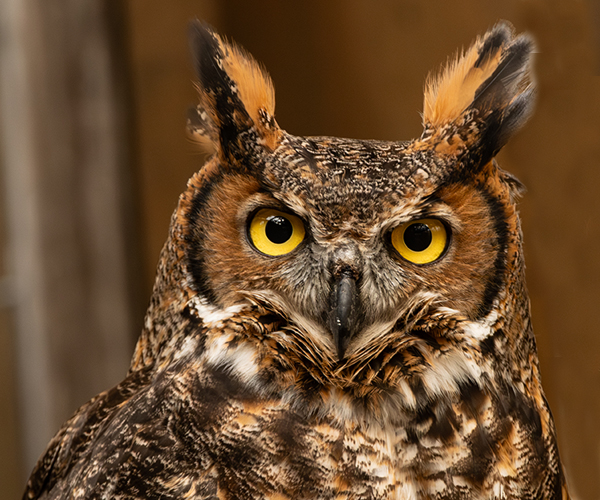
Great Horned Owl
A Great Horned Owl was caught in netting and treated for soft tissue injuries. We were able to release it in late October! Owls are unfortunately prone to getting caught in netting and barbed wire, which can lead to severe injuries, but luckily she was found quickly and suffered only minor harm.
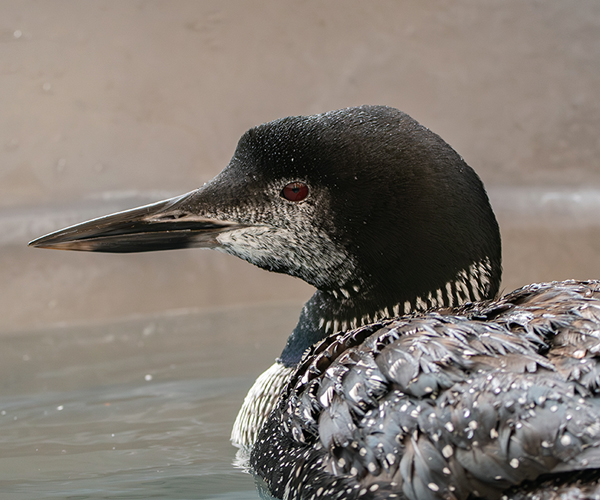
Common Loon
A Common Loon was captured in New York because it had several fishing hooks caught on its foot and feathers. It was underweight, lethargic and had diarrhea so was brought in for rehabilitation. Lab work showed anemia, some minor signs of infection, an intestinal parasite that can cause kidney disease and a metal object in its stomach.
Luckily, the loon doesn’t appear to have any kidney failure or lead poisoning from the metal object. It has some waterproofing issues as well (the feathers shouldn’t look wet). All that said, it has a good appetite, so we are hoping once we get the parasites under control and it builds some strength it will be ready for release. Loons are extremely prone to a severe fungal infection called aspergillosis, so every case is basically a race against time to get them ready for release and out of rehabilitation as quickly as possible. Luckily some Vermont fisheries have been donating live fish to us. It can eat almost a pound and a half of fish per day (~20% of its body weight)!
The VINS Center for Wild Bird Rehabilitation provides care for injured, orphaned, and sick wild birds throughout Vermont and the surrounding region. If you encounter injured wildlife, please call us at 802.359.5000 x212.
By Bren Lundborg, Director, Center for Wild Bird Rehabilitation